Food delivery checks help ensure that incoming products are safe, suitable, traceable and stored at the correct temperature. Before accepting a delivery, check the supplier, vehicle, packaging, labels, dates, temperature and batch information. Reject or isolate anything that does not meet your documented acceptance standards.
Food safety begins when ingredients arrive at the premises. Damaged packaging, incorrect temperatures, expired products or missing traceability information can introduce risks before food preparation even starts.
Regulation (EC) No 852/2004 requires food businesses to maintain suitable hygiene controls. Regulation (EC) No 178/2002 also requires businesses to identify where food has come from and, where applicable, where it has been supplied.
A delivery should therefore be checked before products are moved into storage or production.
Why Goods-In Checks Matter
Key takeaway: Delivery checks stop unsuitable food from entering the business and provide evidence that incoming products have been properly controlled.
Effective checks help businesses:
-
Identify damaged or contaminated food
-
Maintain the cold chain
-
Confirm that products match the order
-
Verify labels, dates and allergens
-
Maintain supplier and batch traceability
-
Record rejected or quarantined products
Signing a delivery note is not enough. The receiving record should show what was checked, the result and any action taken.
Featured Course
Food Hygiene and Safety for Supervisors
Food Hygiene and Safety for Supervisors course covering food safety and hygiene, supervisor responsibilities, APPCC/HACCP, allergens, contamination control, inspection evidence, and a food hygiene certificate level 3..
What Should You Check When Receiving Food?
Key takeaway: Every delivery should be checked using the same clear and documented process.
Confirm the Supplier and Order
Check that the delivery is from an expected or approved supplier and that the products match the purchase order.
Pay particular attention to substitutions. A replacement product may have different allergens, ingredients, storage requirements or preparation instructions.
Inspect the Vehicle
Check the delivery area and vehicle for:
-
Dirt, pests or unusual odours
-
Leaks or damaged containers
-
Poor separation of raw and ready-to-eat food
-
Chemicals stored beside food
-
Signs that chilled or frozen conditions were not maintained
Poor vehicle conditions may indicate wider problems with handling or transport.
Check Packaging
Packaging should be clean, sealed and undamaged.
Reject or isolate products with:
Minor damage to an outer box may not affect sealed inner packaging. Assess the condition of the food-contact packaging before making a decision.
Check Labels and Product Details
Confirm that the product name, storage instructions, allergens and other important information are present and readable.
The delivered product should match the approved specification used by the business.
Check Dates
Do not accept food that has passed its use-by date.
A best-before date normally relates to quality rather than immediate safety, but the product should still have enough remaining shelf life for its intended use.
Check Batch and Traceability Information
Record enough information to identify the product if a withdrawal or recall is announced.
This may include:
Check the Product Condition
Look for signs such as:
Do not accept food that appears unsafe or unsuitable.
Record the Decision
Record whether the delivery was:
Temperature and Date Checks
Key takeaway: Check food against the documented temperature limit that applies to the specific product.
There is no single receiving temperature that applies to every chilled food across the European Union.
The correct limit may be set by:
-
Product-specific legislation
-
National requirements
-
Manufacturer instructions
-
Supplier specifications
-
The business’s food safety procedures
Many businesses use an internal chilled-food target such as 5°C or below. However, this should not be treated as a universal EU legal limit for every product.
Quick-frozen food is generally expected to be maintained at approximately −18°C or lower, subject to applicable legal tolerances.
|
Product type
|
What to check
|
|
Chilled food
|
Check the product-specific limit, label and business procedure.
|
|
Frozen food
|
Check that it remains properly frozen and shows no signs of thawing.
|
|
Hot food
|
Check the documented transport or hot-holding limit.
|
|
Ambient food
|
Check packaging, condition and storage instructions
|
How to Check Temperature
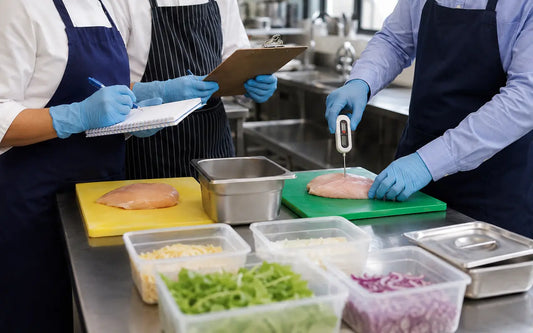
Use a clean and calibrated thermometer where temperature measurement is required.
A simple process is:
-
Check the vehicle or display temperature.
-
Measure between packs where appropriate.
-
Probe a representative product if your procedure requires it.
-
Clean and disinfect the probe before and after use.
-
Record the result and decision.
Do not rely only on the vehicle display. Air temperature may change when doors are opened and may not reflect the actual product temperature.

When Should You Reject a Delivery?
Key takeaway: Reject or quarantine food when it does not meet your documented safety, temperature, packaging or traceability requirements.
Common reasons for rejection include:
|
Problem
|
Action
|
|
Incorrect product temperature
|
Reject or quarantine according to the written procedure.
|
|
Food showing signs of thawing or refreezing
|
Reject or isolate for authorised assessment.
|
|
Open, leaking or contaminated packaging
|
Reject affected products.
|
|
Product past its use-by date
|
Reject.
|
|
Missing supplier or batch information
|
Hold or reject until the information is confirmed.
|
|
Evidence of pests or contamination
|
Reject affected products.
|
|
Evidence of pests or contamination
|
Reject or quarantine.
|
|
Unapproved product substitution
|
Confirm suitability before acceptance.
|
Do not place rejected food in normal storage.
Clearly identify and separate it so that staff cannot use it accidentally. Arrange for return, replacement or disposal according to the business procedure.
The rejection record should include:
Where only part of a delivery is rejected, clearly record which products were accepted and which were not.
Supplier Approval and Traceability
Key takeaway: Supplier approval helps businesses choose reliable suppliers, while traceability records help them identify affected food quickly.
What Is Supplier Approval?
Supplier approval is the process of checking whether a supplier can consistently provide safe, legal and suitable products.
The level of assessment should reflect the type of product and the level of risk
A supplier review may include:
-
Business identity and contact details
-
Registration or approval status where required
-
Product specifications
-
Allergen information
-
Traceability arrangements
-
Temperature-control procedures
-
Complaint and rejection history
-
Recall or withdrawal history
-
Audit or inspection information
-
Response to previous problems
Supplier approval should be reviewed over time. Repeated delivery failures may require corrective action, additional checks or removal from the approved-supplier list.
What Should a Delivery Record Include?
A practical delivery record may include:
These records support the wider food safety monitoring and record-keeping process.
Country variations
EU legislation provides the general food safety framework, but individual countries and sectors may apply additional temperature, documentation or supplier-approval requirements. Businesses should confirm the rules that apply to their products and location.
For wider supervisory responsibilities, see Supervising Food Safety: The Complete Guide for Team Leaders.

Control Food Safety at the Point of Delivery
Key takeaway: Trained supervisors help ensure that unsafe or unsuitable food is identified before it enters storage or production.
Supervisors should make sure that staff understand:
-
What must be checked
-
Which limits apply
-
When food must be rejected
-
How rejected food should be isolated
-
What information must be recorded
-
Who should make decisions when the result is unclear
The Food Hygiene and Safety for Supervisors supports supervisors in developing practical skills in food safety monitoring, record-keeping, corrective action and team management.
Featured Course
Food Hygiene and Safety for Supervisors
Food Hygiene and Safety for Supervisors course covering food safety and hygiene, supervisor responsibilities, APPCC/HACCP, allergens, contamination control, inspection evidence, and a food hygiene certificate level 3..
Training supports implementation but does not replace the need to assess the legal and operational requirements applying to each business.
Sources and Methodology
Key takeaway: This article is based on EU food hygiene legislation, traceability requirements and practical food safety controls.
Principal sources include:
-
Regulation (EC) No 852/2004 on the hygiene of foodstuffs
-
Regulation (EC) No 178/2002 on general food law and traceability
-
European Commission food hygiene information
-
European Commission traceability guidance
-
Council Directive 89/108/EEC on quick-frozen foodstuffs
This article provides general professional guidance and is not legal advice. National and product-specific rules may add further requirements.