There are four types of food contamination: biological, chemical, physical and allergenic. Food businesses control them through hygienic handling, separation, safe chemical use, equipment maintenance, supplier checks and allergen management. Regulation (EC) No 852/2004 requires food to be protected from contamination throughout production, processing and distribution.
Food contamination occurs when a harmful biological agent, chemical substance, foreign object or allergen enters food or is transferred to a place where it should not be. The result may be foodborne illness, an allergic reaction, injury, product withdrawal or loss of consumer confidence.
Food-safety training commonly groups contamination into four practical categories:
-
Biological contamination
-
Chemical contamination
-
Physical contamination
-
Allergenic contamination or cross-contact
This four-part classification is an operational food-safety model rather than a single statutory definition used throughout EU legislation. EU rules nevertheless require food businesses to identify and control relevant hazards through good hygiene practices and procedures based on Hazard Analysis and Critical Control Point principles.
For a wider explanation of business-level controls, see the complete guide to food hygiene and safety.
What are the four types of food contamination?
Key takeaway: The four categories help a food business identify what could make its food unsafe and select controls suited to each hazard.
The four types of food contamination are biological, chemical, physical and allergenic. Biological contamination involves microorganisms or parasites; chemical contamination involves harmful substances; physical contamination involves foreign objects; and allergenic contamination occurs when an allergen is unintentionally present or transferred into another food.
|
Type |
Typical examples |
How contamination occurs |
Principal controls |
|
Biological |
Salmonella, Listeria, norovirus, parasites, moulds |
Raw food, infected handlers, pests, dirty equipment, unsafe water or poor temperature control |
Cooking, chilling, separation, cleaning, hand hygiene and pest control |
|
Chemical |
Cleaning products, pesticides, lubricants, heavy metals, toxins |
Incorrect storage, excessive residues, spills, unsuitable materials or contaminated supplies |
Approved chemicals, correct dilution, secure storage, supplier controls and maintenance |
|
Physical |
Glass, metal, plastic, stones, wood, packaging fragments |
Damaged equipment, broken containers, poor maintenance or careless handling |
Inspection, maintenance, protective covers, stock checks and controlled glass or brittle-plastic procedures |
|
Allergenic |
Milk, egg, peanuts, nuts, cereals containing gluten and other regulated allergens |
Shared utensils, surfaces, oil, storage containers, hands or incorrect labelling |
Separation, validated cleaning, recipe control, accurate information and staff communication |
Regulation (EC) No 852/2004 requires food to be protected against contamination that could make it unfit for consumption or harmful to health. Food businesses must translate that general duty into controls appropriate to their products, processes, premises and customers.

What is biological contamination?
Key takeaway: Biological contamination comes from harmful microorganisms, parasites or their toxins and is a major cause of foodborne illness.
Biological contamination occurs when food contains harmful bacteria, viruses, parasites, moulds or biological toxins. The organism may already be present in a raw ingredient, enter through contaminated water or pests, or be transferred by hands, equipment and contact surfaces.
Common examples include:
-
Salmonella associated with raw poultry, eggs and other contaminated foods
-
Campylobacter associated particularly with raw poultry
-
Listeria monocytogenes in certain chilled, ready-to-eat foods
-
Shiga toxin-producing Escherichia coli in contaminated meat, produce or water
-
Norovirus transferred by infected food handlers or contaminated surfaces
-
Parasites in inadequately controlled fish, meat or fresh produce
-
Toxins produced by microorganisms under favourable conditions
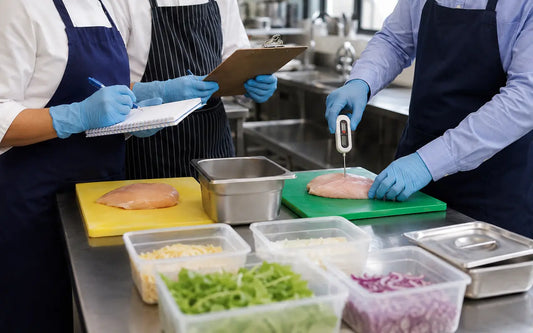
Biological hazards are not always visible, detectable by smell or obvious from the food’s appearance. A clean-looking chopping board can still transfer microorganisms from raw chicken to salad ingredients.
How does biological contamination happen?
A typical example is using the same knife and board for raw poultry and ready-to-eat vegetables without an effective cleaning and disinfection step. Microorganisms from the poultry can then reach food that will receive no further cooking.
Other common routes include:
-
Inadequate cooking or reheating
-
Slow cooling or unsuitable chilled storage
-
Raw food stored above ready-to-eat food
-
Poor handwashing or illness reporting
-
Dirty cloths, utensils or food-contact surfaces
-
Pest activity
-
Contaminated ice or water
-
Deliveries accepted outside safe conditions
How can it be controlled?
Control biological contamination through a combination of approved suppliers, correct storage, effective separation, safe time and temperature controls, hand hygiene, cleaning and disinfection, pest prevention and documented monitoring.
These controls are closely connected to preventing cross-contamination in the kitchen and understanding the causes and prevention of foodborne illness. EFSA assesses biological risks in the EU food chain and works with Member States to monitor organisms including Salmonella, Campylobacter and Listeria.
What is chemical contamination?
Key takeaway: Chemical contamination occurs when harmful chemical substances enter food through products, equipment, the environment, processing or the supply chain.
Chemical contamination can arise inside a food business or before an ingredient arrives. Operational examples include cleaning-fluid residue, pest-control chemicals, excessive sanitiser, equipment lubricant, or chemicals stored above ingredients.
Broader chemical hazards may include:
-
Pesticide or veterinary medicine residues
-
Heavy metals such as lead, cadmium or mercury
-
Mycotoxins produced by certain moulds
-
Environmental contaminants such as dioxins or persistent chemicals
-
Process contaminants formed during heating or manufacturing
-
Migration from unsuitable food-contact materials
-
Excessive or incorrectly used additives
The legal term “contaminant” is narrower than the general training term “food contamination”. The European Commission describes contaminants as substances not intentionally added to food that may arise during production, processing, packaging, transport, storage or through environmental contamination.
Practical chemical-contamination example
A member of staff transfers degreaser into an unlabelled drinks bottle and leaves it near food preparation. Another worker mistakes the bottle for water and uses it during preparation. This failure combines unsuitable storage, missing identification and poor staff communication.
The business should instead retain chemicals in properly identified containers, store them away from food and packaging, follow the manufacturer’s dilution and contact-time instructions, and restrict use to trained workers.
How can it be controlled?
Use only suitable products for the intended food-business environment. Maintain an approved chemical list, safety information and written instructions. Keep chemicals securely stored, control dosing, prevent spray drift, maintain machinery and investigate any spill or suspected exposure before food is released.
Supplier approval is equally important. A restaurant cannot control environmental contaminants or agricultural residues through cleaning alone; it must obtain ingredients from reputable suppliers and respond to recalls, specifications and official alerts.
What is physical contamination in food?
Key takeaway: Physical contamination means an unwanted object has entered food and could injure a consumer or make the product unacceptable.
Physical contaminants include glass, metal fragments, hard plastic, stones, wood splinters, packaging pieces, jewellery, screws, staples and fragments from damaged utensils or machinery. Hair and other personal items may also indicate poor handling, although the level of physical danger depends on the object involved.
Physical contamination can cause cuts, choking, dental damage or internal injury. Even when an object presents limited medical risk, its presence may show that maintenance, handling or inspection controls have failed.
Common causes of physical contamination
-
Chipped glassware or lighting
-
Damaged plastic containers
-
Loose machinery parts
-
Worn chopping boards, brushes or utensils
-
Staples or wire from packaging
-
Stones or field debris in produce
-
Jewellery, pens or personal belongings
-
Poorly controlled maintenance work
-
Damaged sieves, filters or protective covers
How can it be controlled?
Inspect deliveries, food-contact equipment and preparation areas. Remove damaged utensils immediately, maintain equipment preventively, control glass and brittle plastics, cover exposed food during repairs, and account for tools and components after maintenance.
Where appropriate, manufacturers may use sieves, filters, magnets, X-ray systems or metal detection. The chosen control must match the product and process rather than being adopted as a substitute for maintenance and good housekeeping.

What is allergenic contamination?
Key takeaway: Allergenic contamination, usually called allergen cross-contact, occurs when an allergen is unintentionally transferred into food that should not contain it.
Allergen cross-contact may occur through shared equipment, utensils, storage containers, cooking oil, cloths, hands, work surfaces or airborne powders. Very small quantities can be significant for a susceptible consumer, and cooking does not reliably make an allergen safe.
Regulation (EU) No 1169/2011 lists 14 substances or products causing allergies or intolerances for mandatory allergen-information purposes. These include cereals containing gluten, crustaceans, eggs, fish, peanuts, soya, milk, specified nuts, celery, mustard, sesame, sulphur dioxide and sulphites above the relevant threshold, lupin and molluscs.
Commission Regulation (EU) 2021/382 also amended the EU food-hygiene framework to introduce specific food-allergen-management requirements. This means allergen control is not limited to writing information on a menu or label; food businesses must also manage unintended transfer through their operations.
Allergen cross-contact example
A kitchen prepares a dairy-free dessert on a mixer that was previously used for a milk-containing recipe. The bowl looks clean but has not undergone the business’s required allergen-cleaning process. Milk residue enters the new dessert, while staff continue to describe it as dairy-free.
Relevant controls include:
-
Accurate recipes and ingredient specifications
-
Allergen information checked at delivery
-
Clearly identified storage containers
-
Dedicated equipment where necessary
-
Sequenced production from lower- to higher-allergen risk
-
Effective cleaning followed by verification
-
Controlled rework and cooking oil
-
Clear communication between kitchen and service staff
-
Immediate review when an ingredient or supplier changes
How can food contamination be prevented?
Key takeaway: Prevention requires several mutually supporting controls rather than relying on one inspection, checklist or member of staff.
A strong contamination-control system should cover the complete route from supplier approval to service. The following six steps provide a practical framework.
1. Identify hazards in each process
Map receiving, storage, preparation, cooking, cooling, display, transport and service. At each stage, identify potential biological, chemical, physical and allergenic hazards.
2. Prevent contamination at source
Use approved suppliers, clear purchase specifications and delivery checks. Reject food with damaged packaging, pest evidence, unexplained foreign matter, unsuitable temperatures or incorrect allergen information.
3. Separate incompatible activities
Separate raw food from ready-to-eat food, chemicals from ingredients, maintenance tools from production, and allergen-containing materials from foods represented as allergen-free or suitable for a particular customer.
4. Maintain premises and equipment
Repair damaged surfaces and equipment before fragments, leaks or inaccessible dirt create contamination risks. Include food-contact items, extraction systems, refrigeration, lighting, glass, brittle plastics and pest-proofing in planned checks.
5. Train staff by role
Staff need to know not only the rules but also what action to take when something goes wrong. A worker who finds broken glass, an unlabelled chemical or an incorrect allergen ingredient must know how to stop work, isolate affected food and report the incident.
6. Record checks and corrective action
Document critical checks proportionately. Records may include delivery inspections, cleaning schedules, temperature monitoring, maintenance, pest-control findings, allergen changes and rejected products.
A practical Food Hygiene and Safety course can help teams understand how these controls work together within daily operations.
Comparison of the four contamination types
Key takeaway: The correct response depends on the hazard, its route into the food and whether affected products can be reliably identified and isolated.
|
Question |
Biological |
Chemical |
Physical |
Allergenic |
|
Can it usually be seen? |
No |
Usually not |
Sometimes |
Usually not |
|
Can cooking control it? |
Sometimes, if the correct process is applied |
Not reliably |
No |
Not reliably |
|
Is separation important? |
Yes |
Yes |
Yes |
Yes |
|
Are supplier controls important? |
Yes |
Yes |
Yes |
Yes |
|
Is cleaning important? |
Yes |
Yes, including correct rinsing where required |
Yes, but maintenance is also essential |
Yes, with allergen-appropriate verification |
|
Typical immediate action |
Isolate food and assess time, temperature and contact history |
Stop use, isolate food and identify the substance |
Stop production and identify the source and affected batch |
Stop service, isolate food and verify ingredients, equipment and communication |
When contamination is suspected, do not simply remove the visible problem and continue. Isolate potentially affected food, prevent further use, investigate the source, determine the affected quantity, record the decision and seek advice from the competent authority where required.
Do contamination rules vary between EU countries?
Key takeaway: Core EU hygiene and allergen rules apply across Member States, but national authorities may add detailed operational requirements and enforcement guidance.
Regulation (EC) No 852/2004 and Regulation (EU) No 1169/2011 establish EU-wide foundations. However, competent authorities in each Member State may publish sector guidance, sampling expectations, training arrangements or detailed rules for particular food activities.
A business operating in more than one country should therefore use the EU framework as its baseline while checking national and local requirements for each establishment.
Country variations: Training certificates, inspection processes, official guidance and some retail or catering requirements differ between Member States. This article provides general professional guidance and is not legal advice.

Strengthen your contamination controls
Key takeaway: Staff who understand all four contamination categories are better equipped to recognise problems before unsafe food reaches a customer.
Spanish Compliance Institute’s Food Hygiene and Safety training explains the practical controls food handlers and businesses use to prevent biological, chemical, physical and allergenic contamination.
Use training alongside role-specific procedures, supervision, monitoring and competent professional advice. Completing a course does not by itself guarantee legal compliance; the learning must be applied to the organisation’s actual food, processes and risks.
Sources and Methodology
Key takeaway: This article is based on current EU legislation, official European Commission information, EFSA resources and established food-safety practice.
The article was prepared by reviewing the target search intent, relevant EU legislation and authoritative food-safety sources. Legal requirements were distinguished from operational classifications and professional good practice.
Principal sources consulted:
This article should be reviewed at least annually and whenever relevant legislation or official guidance changes.