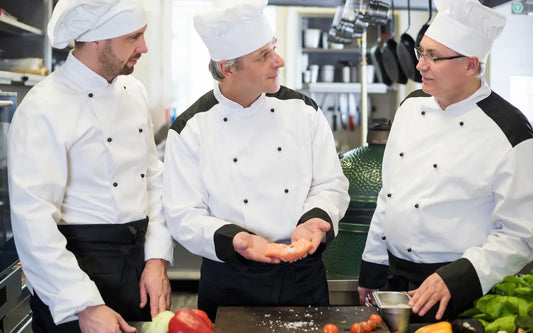
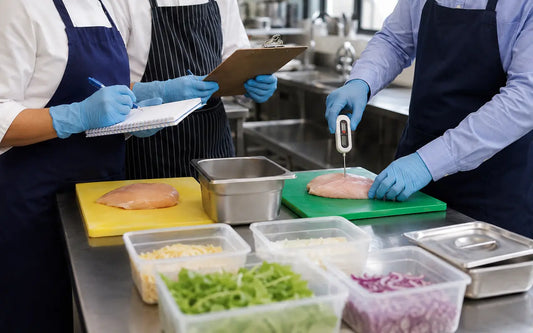
Temporary and seasonal staff need food safety induction before they perform tasks that could affect food hygiene. Under Regulation (EC) No 852/2004, training and supervision must match the work activity. Check prior learning, teach site-specific procedures, supervise early shifts, assess competence and keep clear records for every worker.
Author bio: Add a concise biography confirming the author’s food-safety experience, verifiable qualifications and practical work with food businesses. Include a link to the approved author page.
Agency workers, seasonal recruits and other temporary staff often join when a food business is at its busiest. Supervisors may have less time to train them, while the new starter may be unfamiliar with the premises, equipment, menu, allergen procedures and reporting lines.
That combination creates an obvious operational risk. The solution is not to give every temporary worker the same lengthy course before their first shift. It is to provide proportionate, role-specific instruction, restrict unsupervised work until competence is demonstrated and document what the business has done.
This article focuses on the supervisor’s practical responsibilities. For a broader overview of the role, see the complete guide to supervising food safety.
Do temporary staff need food hygiene training?
Key takeaway: Temporary, agency and seasonal workers require food hygiene instruction, training and supervision appropriate to the work they perform.
Annex II, Chapter XII of Regulation (EC) No 852/2004 requires food business operators to ensure that food handlers are supervised and instructed or trained in food hygiene matters appropriate to their work. It does not provide an exemption for short contracts, agency placements, seasonal employment or occasional shifts.
The legal duty rests with the food business operator. An agency may provide general training, but the receiving food business still needs to make sure the worker understands the actual procedures, hazards and controls at the site where they will work.
The European Commission’s food safety management guidance also explains that training should be proportionate to the nature and size of the business and the risks connected with the activity. Formal classroom training is not always necessary: suitable in-house instruction, supervised practice, technical guidance and on-the-job training may all contribute to competence.
Why temporary workers require particular attention
Temporary workers may be capable and experienced, but the supervisor should not assume that previous experience automatically transfers to a new workplace.
Common gaps include:
-
Different colour-coding or cleaning systems.
-
Unfamiliar cooking, chilling or reheating limits.
-
Different allergen communication procedures.
-
Uncertainty about illness-reporting requirements.
-
Lack of familiarity with local forms and monitoring records.
-
Pressure to work quickly during peak service.
-
Reluctance to question permanent staff or report a mistake.
-
Language, literacy or terminology barriers.
A short contract does not mean a low-risk role. A temporary cook, catering assistant or food-production worker can affect food safety from the first task they complete.
|
Worker situation |
Main supervisory risk |
Appropriate initial control |
|
Experienced agency chef |
Assumes previous procedures apply |
Site-specific briefing and observed competence check |
|
First-time seasonal worker |
Limited food hygiene knowledge |
Basic induction and closely restricted duties |
|
Temporary front-of-house worker |
Gives incorrect allergen information |
Clear escalation procedure and approved information source |
|
Agency cleaner |
Uses incorrect chemicals or methods |
Cleaning schedule, dilution guidance and supervised demonstration |
|
Returning seasonal worker |
Procedures have changed since last season |
Update briefing and reassessment of key tasks |

How do you deliver a fast, effective food safety induction?
Key takeaway: A fast induction should cover the hazards and controls the worker needs before starting assigned duties, rather than overwhelming them with every policy in the business.
Food safety induction should take place before a temporary worker performs unsupervised tasks that could affect food safety. This is a practical risk-control approach rather than a fixed EU deadline expressed in hours or days.
The induction should be concise, structured and directly connected to the person’s role.
A practical induction sequence
-
Confirm the assigned duties.
Establish exactly what the worker will prepare, serve, clean, receive, store or record. -
Explain the most relevant hazards.
Cover contamination, temperature control, allergens, cleaning chemicals or other hazards connected with those duties. -
Show the site procedures.
Demonstrate where equipment, cleaning materials, protective clothing, monitoring forms and approved product information are kept. -
Explain personal hygiene rules.
Cover handwashing, protective clothing, jewellery, personal items, eating, smoking and appropriate workplace behaviour. -
Explain illness reporting.
Tell the worker whom to contact and what to do if they experience symptoms or have been exposed to an illness that may affect food safety. -
Demonstrate critical tasks.
Show the correct process for activities such as taking a temperature, sanitising a surface or preventing cross-contact. -
Check understanding.
Ask the worker to explain or demonstrate the procedure. A signature alone does not prove competence. -
Set clear limits.
Identify tasks the worker may not complete without approval or supervision. -
Record the induction.
Document the topics covered, the trainer, the date and any further support required.
For a more detailed training programme covering permanent and temporary teams, see how to train your food handling team.
Keep the induction role-specific
A dishwasher does not need the same first-shift instruction as a chef, delivery checker or front-of-house team member. Training should match the worker’s actual responsibilities.
For example:
-
A kitchen porter may need immediate instruction on cleaning chemicals, equipment separation, waste handling and contamination prevention.
-
A temporary cook may need site-specific cooking limits, probe-use procedures, cooling controls and recording requirements.
-
A server may need allergen escalation rules, safe service practices and clear instructions not to guess when answering customer questions.
-
A goods-in worker may need delivery acceptance criteria, temperature checks and rejection procedures.
Commission Regulation (EU) 2021/382 added requirements concerning allergen management and food safety culture to the EU hygiene framework. Where a temporary worker’s duties could affect allergen safety, the induction should address the relevant site controls and communication procedures.
How should you check prior food safety certificates?
Key takeaway: Treat certificates as evidence of previous learning, not as proof that the worker can follow your current site procedures.
Ask the worker or supplying agency for information about previous food hygiene training where relevant. Check:
-
The name of the learner.
-
The training provider.
-
The course title and content.
-
The completion date.
-
The language used.
-
Whether the training covered the worker’s present duties.
-
Whether significant laws, procedures or workplace practices have changed.
-
Whether the worker can demonstrate the expected skills.
EU food hygiene law does not generally require every food handler to possess a particular branded certificate. The core requirement is appropriate supervision, instruction or training and sufficient competence for the work performed. The Commission expressly recognises that competence may be developed through formal courses, in-house training, professional guidance and supervised practical instruction.
A certificate therefore does not remove the need for site induction. Equally, the absence of a formal certificate does not automatically mean a worker is unsuitable, provided the business gives appropriate instruction, supervision and competence assessment.
How should temporary staff be supervised during their first shifts?
Key takeaway: Use closer supervision until the worker consistently demonstrates that they understand and follow the required controls.
Temporary staff should know who is supervising them and where to obtain help. Avoid vague instructions such as “ask anyone if you are unsure”. Assign a named supervisor, shift leader or competent buddy.
Apply graduated supervision
Start by observing the worker complete the most important tasks. Reduce supervision only when they have demonstrated competence.
Supervisors should:
-
Watch the worker perform critical activities.
-
Correct unsafe behaviour immediately.
-
Explain why the correction matters.
-
Confirm that monitoring records are completed accurately.
-
Ask short questions to test understanding.
-
Recheck performance later in the shift.
-
Record any retraining or restricted duties.
-
Escalate serious concerns to the responsible manager.
A worker who cannot demonstrate a critical task should not be left to perform it unsupervised merely because the operation is busy.
Use clear stop-and-escalate rules
Temporary workers should be told to stop and seek help when:
-
Food may have been contaminated.
-
A temperature limit is missed.
-
Allergen information is uncertain.
-
Cleaning chemicals have been used incorrectly.
-
Equipment is damaged or malfunctioning.
-
A delivery appears unsafe.
-
A customer reports an illness or allergic reaction.
-
They are asked to perform a task they have not been trained to complete.
These rules reduce guesswork and help build a culture in which reporting a problem is treated as responsible behaviour rather than failure.

What food safety training records should you keep?
Key takeaway: Records should show who received training, what was covered, who delivered it and whether the worker demonstrated competence.
Regulation (EC) No 852/2004 focuses on effective supervision and training rather than prescribing one universal induction form. Nevertheless, clear records help a business demonstrate how it has managed its responsibilities and identify workers who need further support.
A temporary-staff training record should normally include:
-
Worker’s full name.
-
Employer or supplying agency.
-
Job title and assigned duties.
-
Workplace or department.
-
Start date.
-
Date and time of induction.
-
Training topics covered.
-
Procedures demonstrated.
-
Previous training reviewed.
-
Language or communication support provided.
-
Competence checks completed.
-
Restricted duties, where applicable.
-
Further training required.
-
Trainer or supervisor’s name.
-
Worker and trainer confirmation.
-
Review date or follow-up outcome.
Do not use signatures as the only evidence. Combine the record with observation, questioning and practical demonstration.
When should training be refreshed?
EU legislation does not set one universal refresher interval for every food worker. The Commission’s guidance says refresher training and its frequency should be considered according to the establishment’s needs and the skills demonstrated by staff.
Refresh or repeat instruction when:
-
A worker returns after a long absence.
-
Procedures, menus, equipment or products change.
-
New allergens or higher-risk tasks are introduced.
-
Records show repeated errors.
-
An incident or near miss occurs.
-
The worker changes role.
-
Observation shows that knowledge has not transferred into practice.
Are agency workers covered by food safety law?
Key takeaway: Yes—the receiving food business must ensure that agency workers carrying out food-related duties receive appropriate supervision, instruction or training.
The EU hygiene rules apply to food business operations and food handlers without creating a separate lower standard for agency staff. The practical legal inference is straightforward: when an agency worker performs food-handling duties in your establishment, your business must make sure the worker is competent for those duties and follows your controls.
Contracts with labour agencies should clearly address:
-
What general training the agency provides.
-
What evidence will be supplied.
-
Who verifies the worker’s identity and training.
-
Who provides site-specific induction.
-
Who supervises the first shifts.
-
How competence concerns are reported.
-
How unsuitable placements are replaced.
-
How training records are retained.
The contract can allocate responsibilities between organisations, but it should not create a gap in which each party assumes the other has trained the worker.
Country variations across the European Union
Key takeaway: Regulation (EC) No 852/2004 establishes the EU baseline, but national rules and sector guidance may add training or documentation requirements.
Chapter XII requires compliance with applicable national-law requirements concerning training programmes for people working in certain food sectors. Member States and industry sectors may also publish recognised guides to good hygiene practice.
As a result, businesses should confirm:
-
Whether national law requires specific training for particular roles or sectors.
-
Whether certificates have prescribed formats or validity periods.
-
Whether competent authorities expect particular records.
-
Whether sector-specific guidance applies.
-
Whether local language requirements affect training delivery.
-
Whether temporary workers supplied across borders need additional induction.
The European Commission’s guidance platform provides access to EU and national food hygiene guides, but the competent authority in the country where the establishment operates remains an important source of local requirements.
Professional limitation: This article provides general EU-focused guidance and is not legal advice. National legislation, competent-authority guidance, contracts and sector rules may add requirements.
A supervisor’s temporary-staff onboarding checklist
Key takeaway: A controlled onboarding process prevents temporary staffing pressure from weakening established food safety procedures.
Before allowing a temporary or seasonal worker to operate independently, confirm that you have:
-
Defined the worker’s duties.
-
Reviewed relevant previous training.
-
Delivered a site-specific induction.
-
Covered personal hygiene and illness reporting.
-
Explained allergen procedures where relevant.
-
Demonstrated critical tasks and controls.
-
Checked understanding through questions or observation.
-
Assigned a named supervisor.
-
Restricted tasks that require further competence.
-
Recorded the induction and follow-up actions.
-
Rechecked performance during the first shifts.
-
Scheduled refresher training where needed.

Onboard temporary staff quickly without lowering standards
Key takeaway: Supervisors need practical systems that make safe induction, observation and record-keeping possible even during busy periods.
Temporary staffing can help a food business manage seasonal demand, absence and unexpected workloads. It should not create a second, weaker standard of food safety.
The Food Hygiene and Safety for Supervisors course helps team leaders develop the practical skills needed to train staff, supervise workplace controls, maintain records and act when standards are not met.
Use the course alongside a standard temporary-worker induction checklist so every new starter receives the same essential information and no critical topic depends on memory.
Sources and Methodology
Key takeaway: This article is based on binding EU legislation, European Commission guidance and practical supervisory good practice.
The article was prepared using:
-
Regulation (EC) No 852/2004 on the hygiene of foodstuffs, particularly Annex II, Chapter XII on training. This is binding EU legislation.
-
European Commission Notice on the implementation of food safety management systems, including its guidance on proportionate training, competence and refresher instruction. This is official guidance rather than separate binding legislation.
-
Commission Regulation (EU) 2021/382, which amended the food hygiene framework regarding food allergen management, food redistribution and food safety culture. This is binding EU legislation.
-
European Commission Food Hygiene Guidance Platform, which provides access to representative EU and national guides to good hygiene practice.
-
Search-intent analysis and professional good practice for onboarding, supervising and assessing temporary workers.
The content should be reviewed at least annually and whenever relevant EU or national requirements change.