Featured Course
Basic Food Hygiene for Food Handlers
A practical food and hygiene course for food handlers covering basic food hygiene, food safety, safe handling, allergens, HACCP awareness and certificate-based completion..

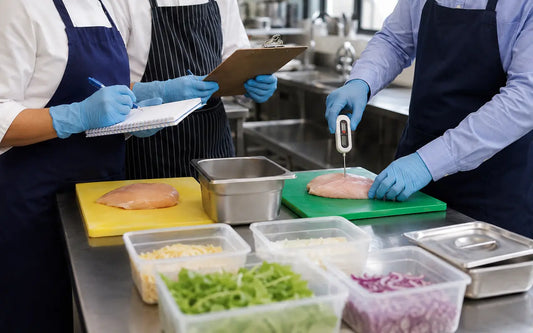
Defrost food safely inside a refrigerator whenever possible. Use cold running water only for suitable packaged foods. Microwave thawing requires immediate cooking. Cooking from frozen needs verified manufacturer instructions. Never thaw food at room temperature. Keep thawed food contained and separate from ready-to-eat foods during handling.
Key takeaway: Controlled thawing limits bacterial growth and cross-contamination.
Freezing stops bacterial growth but rarely kills every bacterium. During thawing, surviving bacteria can recover and multiply.
The food surface usually warms before its centre. That uneven warming creates avoidable food-safety risks.
Regulation (EC) No 852/2004 governs EU food hygiene. Its Annex II covers thawing controls for food businesses. Thawing must minimise pathogenic growth and toxin formation. Resulting liquids must also drain safely where necessary.
EFSA recommends low-temperature thawing whenever possible. It also recommends clean containers and original packaging. These controls reduce contamination during thawing.
In busy kitchens, rushed thawing causes repeated problems. Large joints often remain frozen internally. Their outer surfaces may become dangerously warm. Leaking poultry can contaminate lower refrigerator shelves.
Good planning prevents most thawing failures. Check stock needs before each service period. Move frozen items early enough for controlled thawing. Record important checks within workplace procedures.
Imagine frozen chicken left beside a preparation sink. The outside softens quickly during the morning. The centre remains frozen for several hours. Raw juices then spread across nearby surfaces.
That process combines two significant hazards:
Bacterial growth on warming surfaces
Cross-contamination from leaking raw juices
Refrigerated thawing controls both hazards more effectively.

A practical food and hygiene course for food handlers covering basic food hygiene, food safety, safe handling, allergens, HACCP awareness and certificate-based completion..
Key takeaway: Choose methods matching food type and instructions.
No single method suits every frozen product. Always check packaging and workplace procedures first. Your HACCP-based controls may require specific methods.
Refrigerator thawing is usually the safest method. Keep chilled food between zero and five degrees Celsius. Place food inside a clean, covered container. Keep raw foods below ready-to-eat foods.
Use a tray for meat, poultry, and seafood. The tray must contain all thawing liquids. Keep packaging intact whenever practical. Label the item with its defrosting date.
Follow these steps:
Check the product instructions.
Place food inside a covered tray.
Store raw foods on lower shelves.
Allow enough time for complete thawing.
Check the centre before cooking.
Cook promptly after complete thawing.
The Food Safety Authority of Ireland recommends refrigerator thawing. It says surface temperatures should remain below five degrees.
Cold-water thawing needs careful limits. EFSA supports this method for certain packaged produce. Examples include vegetables, fruit, and separated berries. Keep products protected inside suitable packaging.
Do not treat this as universal guidance. Some authorities discourage sink thawing for general foods. FSAI advises against rinsing frozen food under taps.
Therefore, follow these practical controls:
Use only approved workplace procedures.
Follow the product manufacturer’s instructions.
Keep food protected from sink contamination.
Prevent splashing onto nearby surfaces.
Cook immediately when instructions require cooking.
Never use warm or standing water.
Use refrigerator thawing when uncertainty remains.
Microwave thawing is fast and practical. However, it can heat food unevenly. Some sections may begin cooking during defrosting. Bacteria can multiply inside warmed areas.
Use the microwave’s defrost setting. Rotate or separate portions where practical. Cook the food immediately after thawing. Never return microwave-thawed raw food into storage.
This method suits smaller portions best. It also supports urgent, controlled preparation. FSAI recommends immediate cooking after microwave thawing.
Some foods can cook safely from frozen. The packaging must permit this method. Examples may include vegetables and prepared products. Some small portions may also allow direct cooking.
Follow cooking instructions exactly. Extend cooking time where instructions require this. Check the food’s core temperature before service. Ensure complete cooking throughout every portion.
Never assume direct cooking is always safe. Large meat or poultry joints need careful controls. Their centres may remain undercooked after surface browning.
|
Method |
Best Use |
Main Control |
Key Warning |
|
Refrigerator |
Most foods |
Maintain chilled conditions |
Allow sufficient time |
|
Cold running water |
Suitable packaged produce |
Prevent contamination |
Follow approved instructions |
|
Microwave |
Small urgent portions |
Cook immediately |
Uneven warming occurs |
|
Cook from frozen |
Approved products |
Follow cooking instructions |
Verify the centre |
Key takeaway: Room temperatures warm surfaces before frozen centres.
Never leave frozen food on counters overnight. The surrounding air warms exposed surfaces quickly. Meanwhile, the food’s centre remains partly frozen.
This creates an unsafe temperature difference. Surface bacteria may multiply before complete thawing. The food may look safe but remain risky.
Room-temperature thawing also increases contamination opportunities. Drips can reach worktops, handles, and equipment. Staff may move the food repeatedly. Each movement creates another contamination route.
Avoid these common mistakes:
Leaving meat beside sinks
Thawing poultry inside open trays
Using warm water
Leaving food inside delivery boxes
Storing raw food above salads
Guessing whether centres are thawed
Refreezing unused raw portions
Ignoring manufacturer instructions
A simple prevention rule works well. Plan thawing during stock preparation. Refrigerate foods before the next service period.
Key takeaway: Do not refreeze defrosted food before cooking.
EFSA advises against refreezing food after defrosting. Bacteria can recover and multiply during thawing. Refreezing does not remove that bacterial load.
However, cooking changes the situation. FSAI allows thawed food to be cooked. The cooked food may then be frozen safely. Correct cooling and storage controls still apply.
Use this decision guide:
|
Situation |
Recommended Action |
|
Food remains fully frozen |
Return promptly to frozen storage |
|
Food has partly thawed |
Follow workplace procedures |
|
Raw food has fully thawed |
Cook promptly |
|
Thawed food has been cooked |
Cool safely, then freeze |
|
Safety history remains uncertain |
Discard the food |
Never rely only upon appearance or smell. Unsafe food may show no obvious warning signs. Ask a supervisor when storage history remains uncertain.
Key takeaway: Contain raw juices and prevent cross-contamination.
Raw animal foods need careful separation. Place them inside covered, leak-proof containers. Keep them beneath ready-to-eat foods. Clean every contaminated surface immediately.
Plan enough refrigerator space before thawing meat. Separate large joints from smaller portions. Check thick centres before cooking begins. Never depend only upon softened surfaces.
Poultry juices can contaminate many surfaces. Keep packaging inside a deep tray. Do not wash raw poultry. Wash hands after handling its packaging.
Thaw fish inside refrigeration whenever practical. Keep it protected inside suitable packaging. Drain thawing liquids without splashing. Cook promptly after complete thawing.
EFSA recommends trays for meat, fish, and seafood. This prevents liquids contaminating other foods.
There is no universal thawing time. Food size and shape affect timing. Packaging thickness also changes thawing speed. Refrigerator temperature remains another important factor.
Small portions may thaw faster than large joints. Never promise an exact time without product instructions. Follow manufacturer guidance and workplace procedures. Check the centre before cooking.
Key takeaway: National guidance may add stricter operational controls.
Regulation (EC) No 852/2004 applies across the EU. Member States may publish additional practical guidance. Inspection approaches can also differ nationally. Local procedures may set stricter temperature controls.
Businesses should check national authority guidance. They should also follow approved sector guidance. Manufacturer instructions remain important for specific products.
This article provides general educational guidance. It does not replace legal advice. It also cannot replace workplace risk controls.
Key takeaway: Use consistent checks before, during, and after thawing.
Confirm the required quantity.
Read the product instructions.
Select the approved method.
Prepare clean containers.
Check refrigerator space.
Keep raw foods separated.
Contain all thawing liquids.
Maintain required temperatures.
Protect food from contamination.
Prevent unnecessary handling.
Check the centre completely.
Cook promptly where required.
Clean contaminated equipment.
Wash hands thoroughly.
Complete required records.
These checks reflect official EU and national guidance.

Key takeaway: Planning and supervision prevent rushed unsafe decisions.
Use a daily production forecast. Match thawing quantities with expected demand. Avoid thawing excessive stock without clear need. EFSA recommends thawing only necessary amounts.
Supervisors should define approved methods. They should also explain rejected methods. Clear rules help staff act consistently. Visual labels support safer shelf placement.
Training should cover these practical points:
Approved thawing locations
Required refrigerator temperatures
Raw-food separation
Container requirements
Microwave limitations
Refreezing restrictions
Cleaning responsibilities
Escalation procedures
Review failures during team briefings. Focus on prevention rather than blame. Update procedures after equipment or menu changes.

Key takeaway: Training supports consistent decisions during busy operations.
Safer thawing depends upon everyday handling habits. Food handlers need clear methods and supervision. Records can support training and operational reviews.
Build foundations through Basic Food Hygiene for Food Handlers.
The course covers practical food-handling responsibilities. It supports safer workplace habits and stronger awareness.
Review safe reheating guidance after thawing cooked foods.
A practical food and hygiene course for food handlers covering basic food hygiene, food safety, safe handling, allergens, HACCP awareness and certificate-based completion..
Key takeaway: This article prioritises current official food-safety sources.
This article uses official legislation and regulatory guidance. It also applies recognised international good practice. Search-intent analysis shaped the question-led structure.
Important sources consulted:
Regulation (EC) No 852/2004, through EUR-Lex.
EFSA’s safe defrosting guidance and infographic.
Food Safety Authority of Ireland temperature guidance.
Codex General Principles of Food Hygiene, CXC 1-1969.
The supplied editorial brief and cluster requirements.