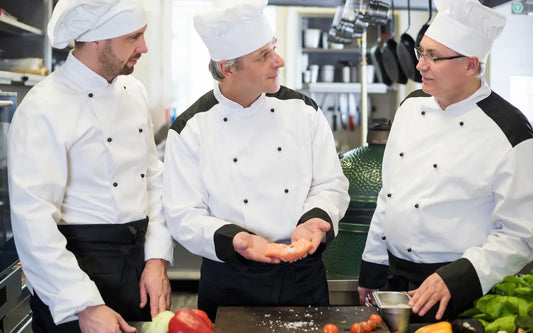
If you want to work with food in Spain, you may hear many different terms.
Food hygiene certificate. Food handler certificate. Food handling certificate. Food handler card. Manipulador de alimentos. Carné de manipulador de alimentos.
It can feel confusing, especially if you are starting a new job, opening a food business, hiring staff, or trying to understand what an employer is asking for.
The simple answer is this: in Spain, food workers need suitable food hygiene training for the work they do. A certificate is the normal way to show that the training was completed.
A food hygiene certificate is not a magic permit. It does not give a business permission to open a restaurant, run a food truck, or sell food in a public space. But it is important evidence. It helps show that the person handling food has learned the basic hygiene, contamination, allergen, HACCP, cleaning, and temperature control rules needed for safer food work.
This guide explains what a food hygiene certificate in Spain means in 2026, who needs one, how online training works, what the course should cover, and how it connects to Spanish and EU food hygiene rules.
What Is a Food Hygiene Certificate in Spain?
A food hygiene certificate is a document that shows a person has completed food hygiene training.
In Spain, this is often called a food handler certificate or certificado de manipulador de alimentos. It is used as proof that the worker has studied safe food handling and passed an assessment.
The certificate usually shows your name, the course name, the training provider, the completion date, and sometimes a certificate number or verification method. Some certificates may also mention the course topics, such as hygiene, contamination, HACCP, allergens, cleaning, and food safety duties.
The certificate matters because food businesses need to show that workers have been trained for their role. A restaurant, café, bakery, hotel kitchen, catering business, food truck, supermarket food counter, or care home kitchen should not rely only on “common sense.” Food safety needs training and evidence.
But it is important to understand one thing clearly.
A food hygiene certificate proves training. It does not prove that the person is handling food safely every day. The real goal is safe behaviour at work.
A worker can have a certificate and still make mistakes if they do not wash hands properly, leave food at unsafe temperatures, mix allergens, use dirty utensils, or guess when a customer asks about ingredients. That is why a good certificate should be supported by good workplace habits.
Is a Food Hygiene Certificate the Same as a Food Handler Certificate?
In everyday use, yes. Most people use these terms to mean almost the same thing.
A “food hygiene certificate” usually means proof that someone completed food hygiene training.
A “food handler certificate” usually means proof that someone completed training for handling food safely.
A “food handling certificate” is another phrase people use for the same idea.
In Spain, the most common Spanish phrase is certificado de manipulador de alimentos. You may also hear manipulador de alimentos, which means food handler.
The wording may change, but the idea is the same: the worker must understand safe food handling, and the business must be able to show training evidence.
The important question is not only what the document is called. The important question is whether the training is suitable for the work.
For example, a person serving packaged drinks may need basic hygiene knowledge. A cook handling raw chicken needs deeper knowledge of cross-contamination, cooking, cleaning, storage, and temperature control. A supervisor may need stronger understanding of HACCP, records, corrective actions, allergen procedures, and staff training.
So when choosing a course, do not only ask, “Will I get a certificate?” Ask, “Will this course teach what I need for my food role in Spain?”
For a wider overview of the topic, read Food Handler Training in Spain: Online Course, Certificate and 2026 Rules.
Who Needs a Food Hygiene Certificate in Spain?
You may need food hygiene training if your work can affect food safety.
This includes direct food contact, but it can also include contact with food equipment, food surfaces, packaging, storage areas, cleaning systems, or customer allergen information.
Many roles may need training, including kitchen assistants, chefs, cooks, waiters who handle food, café staff, bar workers serving food, bakery staff, catering workers, hotel breakfast staff, deli workers, supermarket food-counter staff, food truck workers, market food vendors, school canteen staff, care home kitchen workers, food production staff, food transport workers, and food business owners.
The need is not based only on job title. It is based on risk.
Ask this simple question: can this person’s work affect whether food is safe to eat?
If the answer is yes, suitable food hygiene training is needed.

A waiter may need to understand hand hygiene, ready-to-eat food handling, and allergen communication. A bakery worker may need to understand allergens, storage, cleaning, and ingredient control. A food truck worker may need to understand temperature control, water access, waste, rush service, and cross-contamination. A manager may need to understand records, supervision, and inspection readiness.
This is why training should match the job. One certificate may help show general food hygiene knowledge, but workers may still need extra workplace-specific instruction.
Is the Old Food Handler Card Still Required?
This is one of the biggest points of confusion in Spain.
Many people still search for “food handler card Spain” or “carné de manipulador de alimentos.” These phrases are common because people remember the older system.
But Spain no longer works under the old government-issued card model in the same way.
Today, the focus is on suitable training and proof of training. That proof is usually a certificate from a training provider.
So the simple answer is this: you do not normally apply for an old-style official food handler card from a government office. Instead, you complete suitable food hygiene training and keep your certificate as evidence.

This matters because many websites online are written for other countries. Some talk about health department cards, state permits, county rules, or local food handler licenses. That may be correct in the United States or other countries, but it can confuse people working in Spain.
In Spain, the food business has responsibility. The business must make sure food handlers are trained for their work and must be able to show evidence during official controls.
For a full explanation of this topic, read Do You Still Need a Food Handler Card in Spain?.
What Spain and EU Rules Say About Food Hygiene Training
Food hygiene training in Spain is shaped by both EU food hygiene rules and Spanish national rules.
The main EU hygiene rule is Regulation (EC) No 852/2004. In plain language, it says food businesses must make sure food handlers are supervised, instructed, or trained in food hygiene matters in a way that fits their work.
This is why a food hygiene certificate matters. It helps show that training happened.
Spain’s Royal Decree 109/2010 is also important because it changed the older food handler card system. It removed the older administrative model and placed more responsibility on food businesses to ensure and prove worker training.
Modern food hygiene also includes more than handwashing. Regulation (EU) 2021/382 updated the EU hygiene framework in areas such as allergen management, food redistribution, and food safety culture. This means food businesses are expected to treat food safety as a daily habit, not only as a certificate filed away after training.
Allergen information is also important. Regulation (EU) No 1169/2011 sets EU rules for food information to consumers, including allergen information. For food businesses in Spain, this matters because customers may ask what is in the food, especially in restaurants, bakeries, cafés, catering, and food stalls.
The key idea is simple: food hygiene training is not just paperwork. It helps workers understand how to protect customers.
Can You Get a Food Hygiene Certificate Online?
Yes, online food hygiene training can be a useful way to get certified.
Many workers choose online training because it is flexible. You can study from home, complete the lessons at your own pace, take an assessment, and download your certificate after passing.
Online training can be useful for job seekers who need certificate evidence before applying for food work. It can also help employers train staff in a consistent way.
But online training should still be good training.
A weak course that only gives a quick certificate may not help much in real work. A strong online food hygiene course should explain the actual risks food workers face: dirty hands, poor storage, weak temperature control, cross-contamination, allergens, cleaning mistakes, pests, waste, and unsafe habits during busy service.
It should also connect the training to Spain and EU food hygiene expectations.
Online training is not a replacement for workplace instruction. Your employer still needs to show you the real procedures in the workplace. This may include where cleaning records are kept, how fridge temperatures are checked, where allergen information is stored, what to do if equipment fails, and who to tell if something goes wrong.
The best approach is usually simple: complete formal food hygiene training, then apply it inside the actual workplace.
Need an online food hygiene course for Spain? Complete Food Handler Training online and keep your certificate ready as evidence of your training.
What Should a Food Hygiene Course Cover?
A good food hygiene course should prepare people for real food work, not just a simple quiz.

The first topic is personal hygiene. Workers need to know when to wash hands, how to wash them properly, when gloves help, when gloves create false confidence, why clean clothing matters, and when illness must be reported before handling food.
The next topic is contamination. Food can become unsafe because of biological hazards, chemical hazards, physical hazards, or allergens. A worker should know how these hazards enter food and how to stop them.
Cross-contamination is one of the most important parts of food hygiene. It can happen when raw food touches ready-to-eat food, when dirty hands touch clean utensils, when the same board is used for raw meat and salad, or when a cloth spreads germs from one surface to another.
Temperature control is another key topic. Some foods need to stay cold. Some need to stay hot. Some must be cooked fully. Some must cool quickly before storage. Workers should understand that time and temperature can affect whether food remains safe.
Cleaning and disinfection should also be explained clearly. Cleaning removes dirt and food residue. Disinfection reduces germs on a surface. A surface can look clean but still be unsafe if it has not been disinfected properly.
A course should also cover safe storage, stock rotation, pest awareness, waste control, and basic traceability.
HACCP should be included in simple language. Food handlers do not always need to design a full HACCP system, but they should understand the idea: find what can go wrong, control it, check it, fix problems, and keep evidence.
Allergen awareness should also be included. Workers should not guess when customers ask allergen questions. They should know where to check information and how cross-contact can happen through shared tools, surfaces, fryers, hands, sauces, and toppings.
Finally, the course should explain food safety culture. This means food safety is part of the way people work every day, not only something they talk about before an inspection.
For more detail on training content, read Everything You Need to Know About Food Handling in 2026.
How Long Does a Food Hygiene Certificate Last?
This is another common question.
Spain does not have one simple national expiry date for an old-style government food handler card because that old card model no longer works in the same way.
Instead, training should stay current and suitable for the worker’s role.
This means refresher training may be needed when the worker changes role, moves into higher-risk food tasks, starts working with new equipment, handles different foods, joins a new business, or returns to food work after a long break.
Refresher training may also be useful if the business changes its menu, suppliers, allergen procedures, cleaning system, storage process, or HACCP records.
A certificate from years ago may not be enough if the worker no longer remembers the rules or if the work has changed.
The safer rule is this: training should be refreshed when the risk changes or when the worker needs updated knowledge.
If you are unsure, ask whether the certificate still matches the work being done today.
Can You Use a Spanish Food Hygiene Certificate Across the EU?
A Spanish food hygiene certificate can be useful because the main food hygiene principles come from EU law. Many hygiene ideas are shared across EU countries.
But this does not mean there is one automatic EU-wide certificate that every employer or authority must accept.
Acceptance may depend on the employer, country, language, job role, local expectations, and sector. Some employers may accept your certificate as training evidence. Others may ask for extra training, local instruction, or a certificate in another language.
So the safe answer is this: a Spanish food hygiene certificate can support your training record, but you should check with the employer or local authority before assuming it is enough in another EU country.
The same is true inside Spain when moving between roles. A certificate may show general food hygiene training, but a new employer may still need to train you in their own procedures.
How Employers Should Keep Training Evidence
Food hygiene training is not only a worker issue. It is also an employer issue.
If a food business hires workers who handle food, the business should be able to show that they have been trained in a way that fits their role.
This means employers should keep copies of certificates or training records. They should know which staff are trained, when training was completed, what course was taken, and whether refresher training is needed.
Training evidence may be useful during inspections, audits, onboarding, or after a food safety incident.
But evidence is not only a file. Employers should also check that workers understand and apply the training.
A business may have certificates on paper but still have weak hygiene if staff do not follow safe practices. For example, workers may skip handwashing during busy service, answer allergen questions from memory, forget to record temperatures, or clean surfaces without disinfecting them.
Good employers connect training to daily work. They train staff, keep records, supervise behaviour, and correct mistakes early.
Need certificate evidence for food work in Spain? Build food hygiene knowledge online and keep your training record ready for employers or inspection.
Common Mistakes to Avoid
The first mistake is looking only for the cheapest or fastest certificate. Fast training can be useful, but only if it teaches the right content. A certificate with weak learning may not help in a real kitchen, food truck, café, bakery, or catering setting.
The second mistake is confusing the old food handler card with the current system. Spain no longer works like the old official card model. Do not waste time looking for a government card if what you need is suitable training and certificate evidence.
The third mistake is copying advice from other countries. Some food handler articles online are written for the United States, Canada, Australia, or the UK. Those systems may use different terms, permits, cards, or local health authority processes. Spain has its own model inside the EU hygiene framework.
The fourth mistake is treating a certificate as the final goal. The certificate is only proof that training was completed. The real goal is safe food.
The fifth mistake is ignoring allergens. Allergen information can be a serious safety issue. Food handlers should know what allergens are in the food and should never guess when a customer asks.
The sixth mistake is not giving the certificate to the employer. If you are employed, your business may need to keep training evidence. If you are self-employed, keep your own certificate with your food safety documents.
The seventh mistake is thinking one certificate covers every role forever. Training should match the work. If the work changes, the training may need to be refreshed.
Food Hygiene Certificate Checklist
Before choosing a food hygiene course in Spain, check these points.
|
Question |
Why it matters |
|
Does the course cover Spain and EU hygiene expectations? |
Training should match the legal context. |
|
Does it explain the current certificate model? |
This avoids old food handler card confusion. |
|
Does it cover personal hygiene? |
Hand hygiene and illness rules are basic safety controls. |
|
Does it cover cross-contamination? |
This is one of the most common food safety risks. |
|
Does it explain temperature control? |
Poor temperature control can make food unsafe. |
|
Does it include cleaning and disinfection? |
Clean-looking surfaces may still need disinfection. |
|
Does it include HACCP basics? |
Food handlers should understand risk controls. |
|
Does it include allergen awareness? |
Workers should not guess when customers ask. |
|
Does it give a downloadable certificate? |
Employers may need training evidence. |
|
Does it fit your actual food role? |
Training should match the work you do. |
Continue Reading
-
Street Food in Spain: Food Handling Rules Vendors Must Know in 2026
-
Food Hygiene Certificate Spain: What You Need to Know in 2026
-
Spain Food Handler Course Free vs Paid: What Should You Choose?
-
Online Food Hygiene Course in Spain: What You Learn and How Certification Works
-
Food Handlers Manual PDF Spain: What to Study Before Your Certificate
Start online food hygiene training for Spain and keep your certificate ready as evidence of your food handler training.
Written by Marcus Delfield for the Spanish Compliance Institute — professional certification in compliance, regulation, and ethics for professionals working in Spain and across the EU.