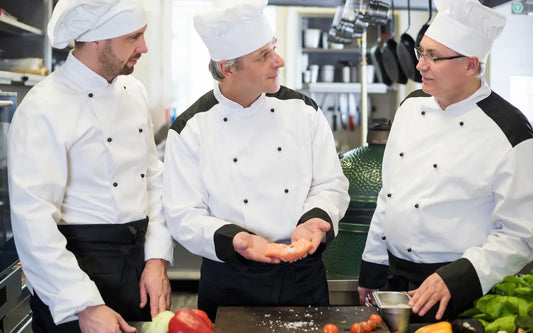
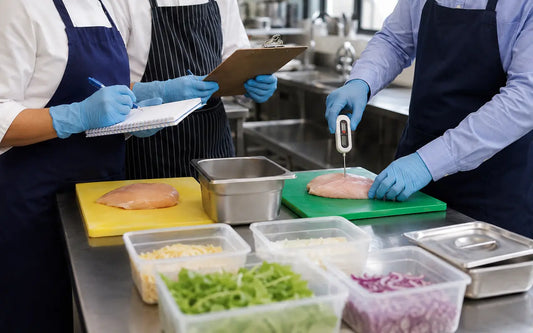
A corrective action in food safety is the response taken when a check fails or a process moves outside its required limit. It should protect affected food, restore control, identify the cause and prevent the same problem from happening again.
Food safety problems can occur even in well-managed businesses. A refrigerator may become too warm, food may not cook properly, a cleaning check may fail or allergen information may be incorrect.
When this happens, supervisors must act quickly and consistently. The aim is not simply to correct the visible problem. The supervisor must also decide what happens to the affected food, restore safe conditions, record the incident and reduce the likelihood of recurrence.
What Is a Corrective Action in Food Safety?
Key takeaway: A corrective action controls a food safety problem and addresses its underlying cause.
A corrective action is taken when monitoring identifies a failure, deviation or loss of control.
For example, if a refrigerator is above its required temperature, the corrective action may include:
-
Confirming the temperature
-
Moving vulnerable food to safe storage
-
Assessing whether the food remains safe
-
Repairing or adjusting the refrigerator
-
Recording what happened
-
Checking that the problem does not happen again
Regulation (EC) No 852/2004 requires relevant food businesses to maintain procedures based on Hazard Analysis and Critical Control Point principles. Codex Alimentarius CXC 1-1969 also identifies corrective action as one of the seven HACCP principles.
The Basic Corrective-Action Process
A practical response should include four stages:
-
Control the immediate risk. Stop the process, isolate affected food or prevent further use.
-
Decide what happens to the food. Retain, reprocess, return or discard it according to the business’s approved procedure.
-
Restore control. Correct the equipment, process, environment or behaviour that caused the problem.
-
Record and review. Document the incident, identify the cause and check that the action was effective.
Correcting the equipment without assessing the food is incomplete. Discarding the food without fixing the cause may allow the problem to happen again.
Featured Course
Food Hygiene and Safety for Supervisors
Food Hygiene and Safety for Supervisors course covering food safety and hygiene, supervisor responsibilities, APPCC/HACCP, allergens, contamination control, inspection evidence, and a food hygiene certificate level 3..
Correction, Corrective Action and Preventive Action
Key takeaway: A correction fixes the immediate issue, while corrective and preventive actions address wider control.
|
Term
|
Purpose
|
Example
|
|
Correction
|
Fix the immediate condition
|
Move food to a working refrigerator
|
|
Corrective action
|
Control the failure and address its cause
|
Assess the food, repair the refrigerator and record the incident
|
|
Preventive action
|
Reduce the chance of a future problem
|
Introduce temperature alarms or planned maintenance
|
A corrective action may include an immediate correction and longer-term preventive steps.
For example, moving food from a warm refrigerator is a correction. Repairing the refrigerator, reviewing stock levels and adding an alarm form part of the wider corrective action.
Common Food Safety Problems and Corrective Actions
Key takeaway: The correct response depends on the food, the hazard and the extent of the failure.
|
Problem
|
Immediate Response
|
Follow-Up Action
|
|
Refrigerator too warm
|
Confirm the reading and protect vulnerable food
|
Assess exposure, repair the unit and review the cause
|
|
Food undercooked
|
Stop service and isolate the batch
|
Continue cooking when safe or discard if safety cannot be confirmed
|
|
Cleaning check fails
|
Prevent use of the affected surface or equipment
|
Reclean, disinfect and investigate why the process failed
|
|
Pest activity found
|
Stop work in the affected area and protect food
|
Remove contaminated food, clean the area and contact pest control
|
|
Allergen information is incorrect
|
Stop sale or service of the affected dish
|
Verify ingredients, update records and brief staff
|
|
Delivery is damaged or outside specification
|
Segregate or reject the delivery
|
Record the issue and contact the supplier
|
|
Thermometer gives unreliable readings
|
Use another verified thermometer
|
Calibrate, repair or replace the faulty device
|
These examples provide general guidance. The final decision should follow the food business’s procedures, product requirements and applicable national rules.
What Should You Do If a Fridge Is Too Warm?
Key takeaway: Confirm the temperature, protect the food and assess how long control may have been lost.
Follow these steps:
-
Confirm the reading. Use a clean and reliable thermometer.
-
Keep the door closed. Avoid allowing more warm air into the refrigerator.
-
Protect vulnerable food. Move chilled food to suitable controlled storage where necessary.
-
Identify when the problem started. Check earlier temperature records and speak to relevant staff.
-
Assess the food. Consider the food type, measured temperature and possible exposure time.
-
Decide what happens to the food. Follow the approved procedure and seek competent advice where necessary.
-
Fix the refrigerator. Repair, adjust or remove it from use.
-
Verify the result. Confirm that the refrigerator can maintain the required temperature before restocking it.
Do not use smell or appearance as the only test of whether food is safe. Where safe control cannot be demonstrated, the decision should protect the consumer.
How Should Corrective Actions Be Recorded?
Key takeaway: The record should clearly explain the problem, the response and the final outcome.
A corrective-action record should include:
-
Date and time
-
Area, equipment or process involved
-
Required standard or limit
-
Actual result
-
Food or batch affected
-
Immediate action taken
-
Decision about the affected food
-
Person responsible for the decision
-
Cause of the problem
-
Further action required
-
Action owner
-
Completion date
-
Verification result
-
Supervisor sign-off
Supporting evidence may include:
-
Photographs
-
Maintenance reports
-
Calibration records
-
Supplier correspondence
-
Waste records
-
Updated procedures
-
Training records
A note such as “temperature corrected” is not enough. The record should explain what happened to the food and how the business restored control.
For wider guidance, see food safety monitoring and record-keeping.
How Can You Prevent the Problem from Happening Again?
Key takeaway: Corrective action is complete only when the underlying cause has been addressed.
Repeated failures often indicate a wider problem with equipment, procedures, supervision, workload or training.
Ask Simple Root-Cause Questions
Ask:
-
What failed?
-
Why did it fail?
-
Why was the problem not prevented?
-
Why was it not identified earlier?
-
What change would make recurrence less likely?
For example, a refrigerator door may have remained open because containers blocked it. The containers may have blocked it because the unit was overloaded. The real issue may therefore be insufficient storage capacity or poor stock management.
Suitable improvements may include:
-
Repairing faulty equipment
-
Changing stock levels
-
Adjusting delivery schedules
-
Improving storage organisation
-
Updating checklists
-
Adding alarms
-
Increasing monitoring temporarily
-
Retraining staff
-
Clarifying responsibilities
Verify That the Action Worked
Set a review date and confirm the improvement was effective.
Verification may include:
-
Reviewing later temperature records
-
Observing the task during a busy period
-
Checking that maintenance was completed
-
Confirming staff follow the revised procedure
-
Looking for similar problems elsewhere
Closing an action without checking the result creates a record, but not assurance.
Country Variations
Regulation (EC) No 852/2004 provides an EU-wide food hygiene framework. However, national and local authorities may apply additional requirements or guidance.
Temperature limits, notification rules, inspection practices and record-retention expectations may vary. Food businesses should follow the rules and official guidance that apply where they operate.
Professional limitation: This article provides general food safety guidance and is not legal advice. National rules and product-specific requirements may require additional action.
A Simple Corrective-Action Checklist
Key takeaway: Supervisors should contain, correct, investigate, prevent and verify.
When a food safety check fails:
-
Stop or control the affected process
-
Protect and isolate affected food
-
Confirm the facts
-
Decide what happens to the food
-
Restore safe conditions
-
Record the incident
-
Identify the cause
-
Assign follow-up action
-
Verify that the action worked
-
Review repeated failures for wider trends
Handle Food Safety Problems with Confidence
Key takeaway: Competent supervisors help turn individual failures into lasting improvements.
Food safety corrective actions require practical judgement. Supervisors must understand monitoring limits, escalation procedures, record-keeping and the difference between fixing a problem and preventing its return.
Featured Course
Food Hygiene and Safety for Supervisors
Food Hygiene and Safety for Supervisors course covering food safety and hygiene, supervisor responsibilities, APPCC/HACCP, allergens, contamination control, inspection evidence, and a food hygiene certificate level 3..
The Food Hygiene and Safety for Supervisors helps supervisors build the knowledge needed to monitor controls, respond to failures and manage food safety consistently.
Sources and Methodology
Key takeaway: This article is based on EU food hygiene law, official guidance and recognised food safety principles.
Important sources include:
-
Regulation (EC) No 852/2004 on the hygiene of foodstuffs
-
European Commission guidance on food safety management systems and HACCP
-
Codex Alimentarius CXC 1-1969, General Principles of Food Hygiene
-
European Commission food hygiene resources
-
European Food Safety Authority food-handling guidance